Where Recreational Diving Ends
Most diving keeps a simple safety margin: at any moment, a diver can ascend straight to the surface. Technical diving gives that up — going deeper, staying longer, or entering caves and wrecks where a direct ascent is impossible. As a technical diving instructor, Darrell R. Seale has spent decades teaching the discipline that makes those dives survivable rather than reckless.
An instructor since 1999 with more than 2,500 dives logged, the diver works between Trophy Club, Texas, and Abu Dhabi, United Arab Emirates. The clearest way to understand what technical diving involves is to walk through the credentials a working instructor actually holds, because each one corresponds to a real hazard that has to be managed.
Trimix and Decompression
At depth, ordinary air becomes a problem as nitrogen turns narcotic and oxygen grows toxic past certain pressures. Trimix blends helium into the breathing gas to manage both, and technical diver Darrell Seale holds Trimix certifications through PADI, TDI, and IANTD. That triple credential is unusual, and it reflects how central deep mixed-gas diving has been across this career.
Longer, deeper dives also require planned decompression stops to release dissolved gas safely on the way up, rather than the direct ascent recreational diving allows. The instructor is certified in decompression procedures and advanced nitrox through TDI — the foundation for staying down longer and surfacing without harm. The math is unforgiving, which is why the training is so rigorous.
Caves and Rebreathers With Darrell Seale
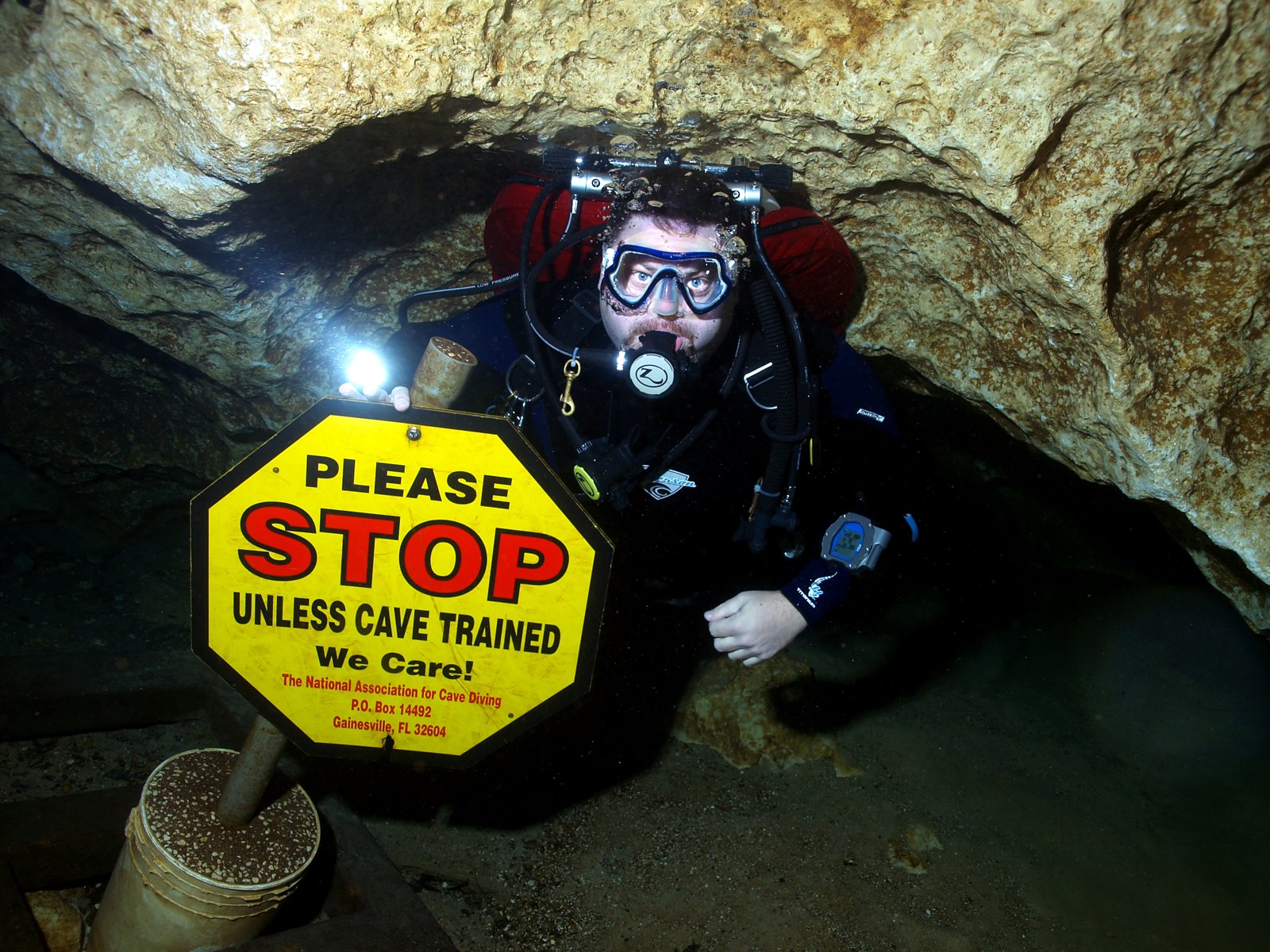
Cave diving is among the most demanding disciplines in the sport, because the ceiling overhead removes any direct path to the surface. It demands meticulous line-handling, gas management, and a temperament that leaves nothing to chance. Darrell Seale’s technical training includes cave certification through the National Speleological Society’s Cave Diving Section, one of the most respected sources of that instruction.
Closed-circuit rebreathers add another layer of complexity. Rather than venting every breath as bubbles, they recycle a diver’s air, scrubbing carbon dioxide and adding oxygen as needed. The payoff is far longer, quieter dives and closer encounters with marine life; the cost is a far more complex system demanding meticulous training. The instructor holds a closed-circuit rebreather certification through TDI.
From Credentials to Judgment
Holding these ratings is one thing; being trusted to teach across them is another. A technical instructor is not merely demonstrating skills but modeling the judgment that keeps divers alive when the easy exit has been removed. That judgment — knowing when not to dive, when to turn around, when to trust the plan — is the real subject technical diving instructor Darrell Seale teaches.
The diver has also explored wreck, cavern, cave, and deep environments around the world and contributed to dive-safety research with the Divers Alert Network. Experience of that depth is what turns a stack of certification cards into genuine competence, and it is what students are really paying for.
Why It Matters
Technical diving rewards preparation and punishes improvisation, which is exactly why the training cannot be rushed. For divers ready to move beyond recreational limits in a deliberate, well-supported way, Darrell Seale offers a measured path into deeper water — one built on the conviction that the goal is always to come back up.
The Equipment Behind the Discipline
Technical diving is as much about gear configuration as it is about gas. Redundant regulators, multiple cylinders, carefully balanced rigs, and meticulously planned bailout options all exist for a single reason: so that the failure of any one component is an inconvenience rather than an emergency. Learning to assemble, check, and trust that equipment is a core part of the training, and it is where many aspiring technical divers discover how much patience the discipline truly demands.
None of it replaces judgment. The most important instrument a technical diver carries is the willingness to call a dive that no longer feels right, even after months of planning. That conviction — that no objective is worth an unacceptable risk — is the quiet center of the entire discipline, and it is taught as deliberately as any skill with a regulator or a reel.
About Darrell Seale
Darrell Seale is an international technical diving instructor and marine conservation advocate with more than two decades of experience and over 2,500 dives worldwide. Based in Trophy Club, Texas, and Abu Dhabi, UAE, this PADI Master Scuba Diver Trainer specializes in Trimix, cave, and rebreather diving. Learn more at darrellseale.com, or connect with him on LinkedIn and Instagram. He is certified to teach all recreational courses, the Divemaster course and 38 specialties. For more on Darrell’s instruction and dive history, see Darrell Seale Scuba Diving.